Childhood in a Hurried World
Some of the most beautiful moments with children are the unhurried ones, when time seems to stand still. In these moments, it can feel as though we have been given a gift and all there is to do is receive it—to simply enjoy the present moment. In many ways, it seems that anxiety itself can begin to melt away. There is such an immersion of body and soul in what is happening right now that there is less worry about what is coming next.
Instead of stressed and rushed, children and their families are simply being and enjoying. Of course, there will always be places we need to be on time and schedules that need to be kept, but we can still have a say in how we want to live within the structure of our days. How much do we want to hurry? How much room can we make for lingering, for following a child's curiosity, for allowing a moment to take as long as it takes?
These moments can happen in the simplest of settings: a Saturday morning with fewer scheduled games and birthday parties, allowing someone to linger over a cup of coffee; a pancake breakfast where every bite of pancake, butter, and syrup is tasted and enjoyed; a slow morning or afternoon of legos and dolls, building forts, dressing up, or simply finding a way to play. There is something about these ordinary moments that feels like a gift. They give children space to become immersed in what they are doing rather than constantly moving toward whatever comes next.
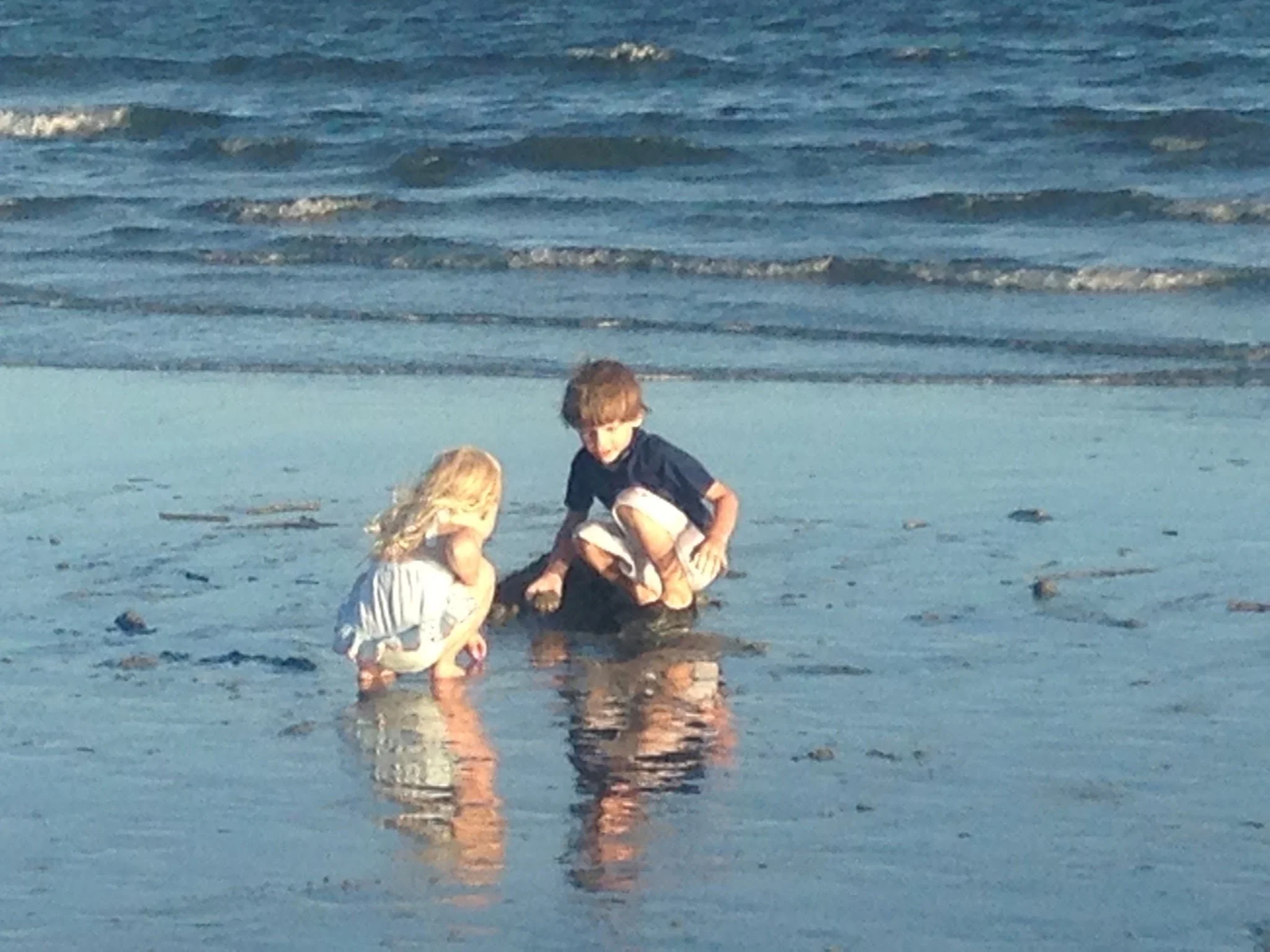
Yet one of the biggest invitations into this kind of unhurried savoring may be time outdoors in beautiful places, where every sense seems to wake up. Why is there a need to hurry when time outdoors stretches out before you, long and wide, with no boundary other than the darkness that eventually comes? A trail winds on. A shoreline invites wandering. A stream keeps moving. There is always something else to notice.
When families have room to be unhurried, children often do too, and this dynamic invites a kind of creative unfolding—a sense of wonder that is hard to develop when every moment is planned. What will this day hold? What will this hike hold? This swim? This wandering along the shoreline? What might we find? What might we see? What might it feel like? There is room for a child to follow a question rather than having the next activity provide the answer.
The combination is invaluable: wild beauty outdoors and the space in time to enjoy it, to linger, to savor, to soak it up. These can be the dreamiest of days. And yet, when we are accustomed to much structure, they can also be surprisingly challenging. What will we do with time that is so open-ended? What if my children are bored? How can we possibly have a day, or a trip, without an itinerary?
Perhaps that discomfort tells us something.
You know you live in a hurried state when a sports game being cancelled brings palpable relief, when a rainy day feels like a gift from above, and when even a child being sick gives you a reason to say no. Sometimes we become so accustomed to the pace of our lives that we don't realize how much we need a reason to stop until something finally gives us one.
A hurried state can also go hand in hand with a nervous system that is continually responding to what is next—the next activity, the next deadline, the next place we need to be. There are certainly times when stress and heightened attention serve us well, helping us find motivation and respond to what is needed. But we also need stretches of recovery. Less hurry, particularly when we are outdoors, can give way to a kind of resetting that we need—adults and children alike. The pace slows, our senses wake up, and there is room again to simply be where we are.
And perhaps this is part of why childhood memories of time spent outdoors can hold such power. Adults, when you think about your own childhood, what are your best memories? Which ones capture the essence of less rush, creative unfolding, and wonder? Where were you? What was happening? Who was with you?
Often these core memories embody times when we did not feel rushed—when we felt not only safe, but free to savor what was happening around us. Maybe it was a summer afternoon that seemed to stretch forever, a long day at the beach, wandering through the woods, building something with friends, or simply having the time and freedom to follow an idea wherever it led.
Perhaps this is part of what we are giving our children when we make room for slowness. Not simply more free time, but the chance to discover what happens when there is time. Time to follow a question, to stay a little longer, to notice something we weren't looking for, to become absorbed in play, to follow curiosity wherever it leads.
In a hurried world, perhaps slowness is not something we have to find. Perhaps it is something we can choose to make room for.